HRMS
Payroll Approval No Longer Required for REN Payments
Payroll has made a process improvement to the M‑Pathways Personnel Action Request (PAR) Additional Pay transaction. This transaction no longer requires Central Payroll Office approval for Retention Bonus (REN) payments. You no longer need to add Central Payroll to the approver list.
Central Payroll approval is still required for earnings codes PST and NTA.
Training materials are available on the Personnel Action Request User Resources page in My LINC.
Student Administration
BI Publisher and Communication Generation Accessibility features - coming in November
In November, Information and Technology Services (ITS) will enable accessibility features for BI Publisher reports and Communication Generation in the Student Administration system.
This change will add behind-the-scenes tags to PDF and HTML documents generated by BI Publisher. These tags help screen readers interpret document content, improving the reading experience for people who are blind or have low vision.
No action is required. Campus units that use BI Publisher templates for communications and reports do not need to make changes for these features to be enabled.
Additional accessibility improvements are encouraged. Campus units can further enhance accessibility by updating their BI Publisher templates. Contact your Student Administration contact for guidance.
If you notice unexpected changes to BI Publisher communications or reports after the accessibility features are enabled, please submit an ITS Service Center ticket.
Safe Computing
Cybersecurity Awareness Month Wrap Up
SUMIT events in October, Cybersecurity Awareness Month, ranged from sessions on cybersecurity topics for the U-M community and a multi-disciplinary panel discussion on election security to a trivia game for staff.
Securing What Comes Next: Cybersecurity Leadership in the Age of AI
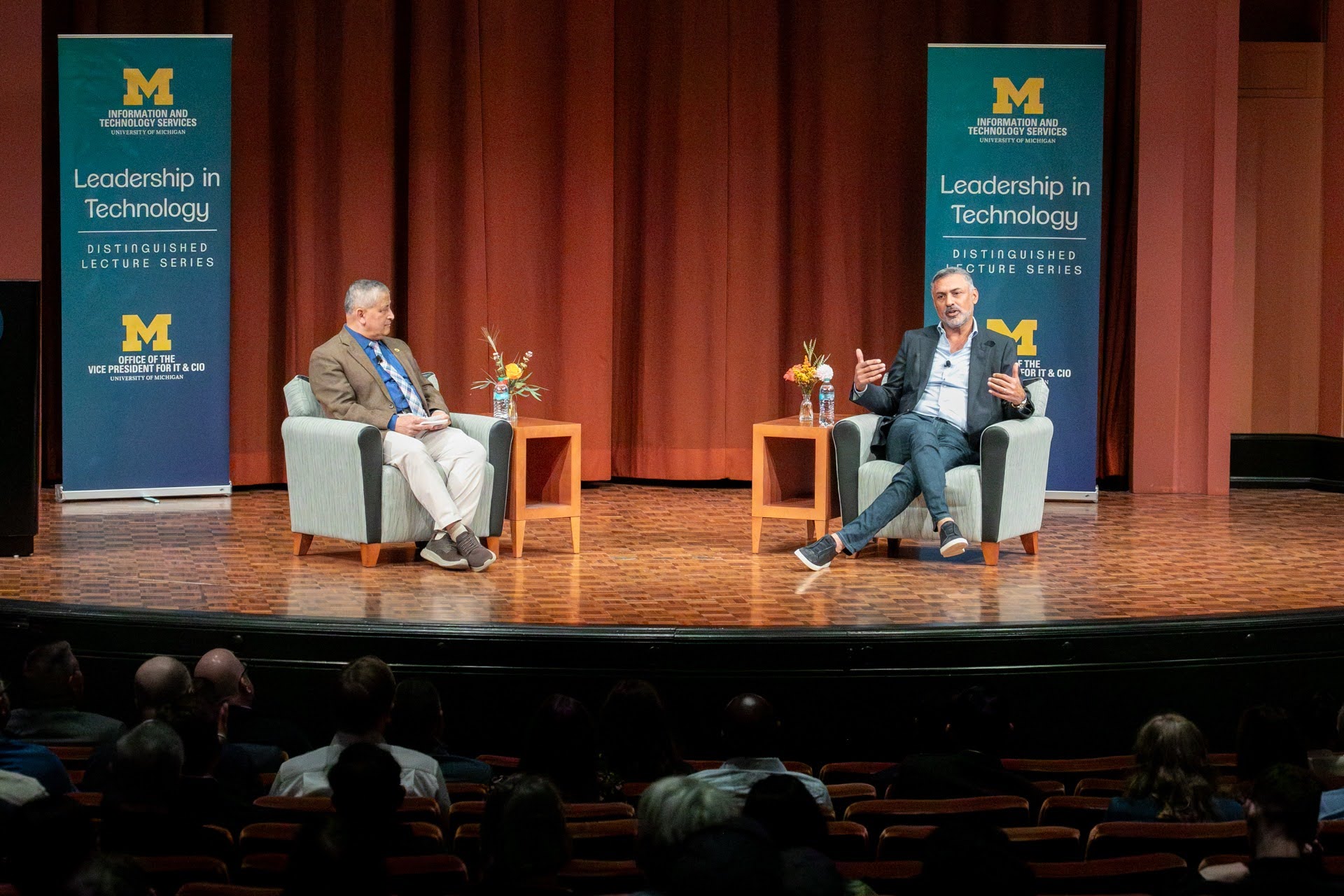
Nikesh Arora, chairman and CEO of Palo Alto Networks, a Fortune 500 company and global leader in AI and cybersecurity serving enterprises and governments worldwide, joined Ravi Pendse, vice president for information technology and chief information officer at U-M, for a candid, forward-looking conversation about cybersecurity leadership in the age of AI.
For a video recording of the event, visit Leadership in Technology: Distinguished Lecture Series.
Securing the Vote: Technology, Evidence, and Trust in the 2026 Midterm Elections
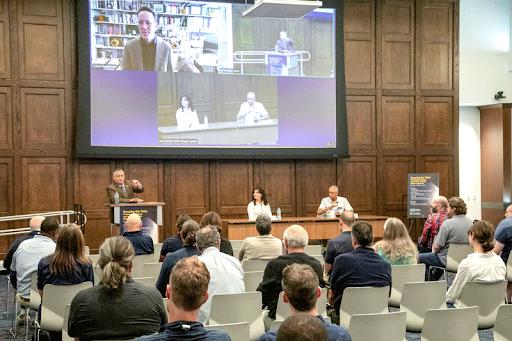
University of Michigan experts came together for a timely, nonpartisan discussion examining cybersecurity threats to election infrastructure, voting technology and verification, the role of audits and evidence in evaluating results, and the challenge of maintaining public confidence in a rapidly changing information environment.
Moderated by U-M Vice President for Information Technology and Chief Information Officer Ravi Pendse, the panel featured:
- J. Alex Halderman, the Bredt Family Professor of Engineering and an election-cybersecurity researcher
- Walter Mebane, professor of political science and statistics and an expert in election forensics
- Mara Ostfeld, research associate professor of public policy and an expert in survey research and public opinion.
Information Assurance Sessions
U-M experts hosted virtual sessions on cybersecurity topics. Visit the pages below for a link to the slide presentation and/or recording (U-M login required):
- A day in the life of a SOC/Incident Response analyst
A behind-the-scenes look at the work performed by SOC/IR analysts to help keep the university secure. (Slides available) - Security tips you can use at school, work, and home
Practical ways to secure your hybrid workspace, and the essential habits & actionable steps to reduce risk and keep university information secure. - Building Trustworthy AI for Research Compliance and Security
How the College of Engineering developed a governance-by-architecture approach for building specialized AI assistants that enforce compliance by design rather than relying on user caution.
Level Up Your Cyber Game - Big Ten
U-M took third place this year competing against other Big Ten teams in this friendly fast-paced webinar game show covering cybersecurity topics. It was sponsored by the Big Ten Academic Alliance. Go Blue!
Visit all Past SUMIT events on the Safe Computing website.
New and Updated Training for Fall 2026
Student Training
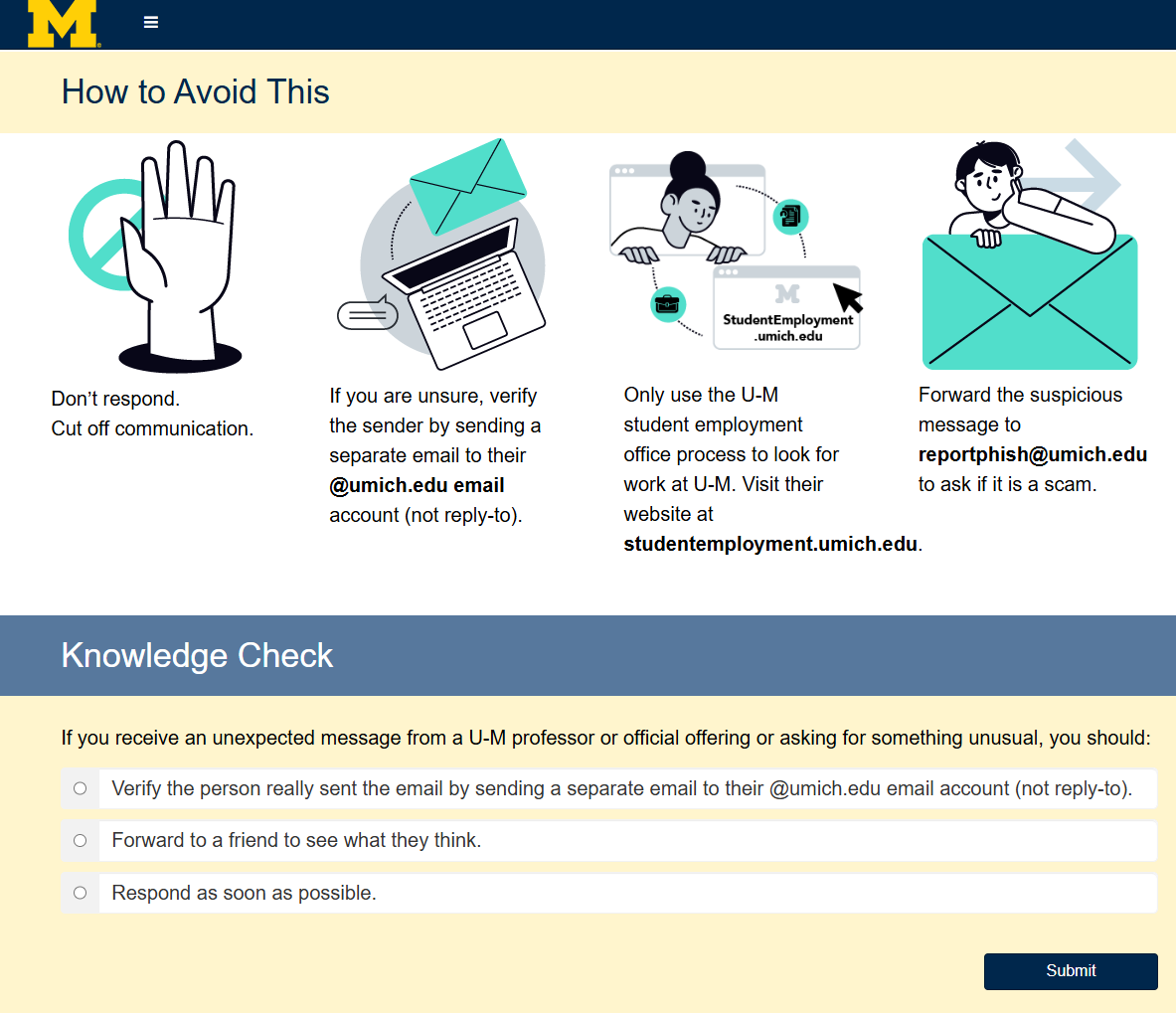
To ensure students are prepared for the types of phishing and scams that are specific to U-M, incoming undergraduate and graduate students across all campuses are required to complete new training titled “Safe Computing for Students.” It is designed to help students protect themselves by avoiding scams that could cost them money, account compromises, or loss of sensitive, personal information. The new course is delivered alongside other required training for all incoming students on topics including alcohol use, mental health, sexual assault prevention, and hazing.
Asmat Noori, Executive Director of Information Assurance and Chief Information Security Officer, emphasized the value of the training when he said, “Every student relies on technology every day, which means every student has a role in cybersecurity. Basic security awareness training gives everyone a shared foundation and some simple, practical tools to better protect themselves and their accounts.”
Over 14,000 students on the Ann Arbor, Flint, and Dearborn campuses have completed the new “Safe Computing for Students” course, and exceeded 70% of the targeted audience on the Ann Arbor campus. And because cybersecurity threats are an ongoing issue, the “Safe Computing Challenge” will continue to be offered each October as a voluntary quiz with prize incentives. Both trainings include examples of phishing and other threats and will be refreshed each year based on real activity at U-M, so students should be prepared if they encounter them in their inboxes or on social media.
Faculty and Staff Training
- A new course, DSE102: Data Request Management, has been published. It builds on DSE101: Introduction to Data Stewardship at U-M and covers roles, responsibilities, and processes for assessing data requests, documenting decisions, and more.
- The DCE101: Cybersecurity and Data Protection at U-M course, which is required annually, has been updated with new examples of phishing and scams for this year.